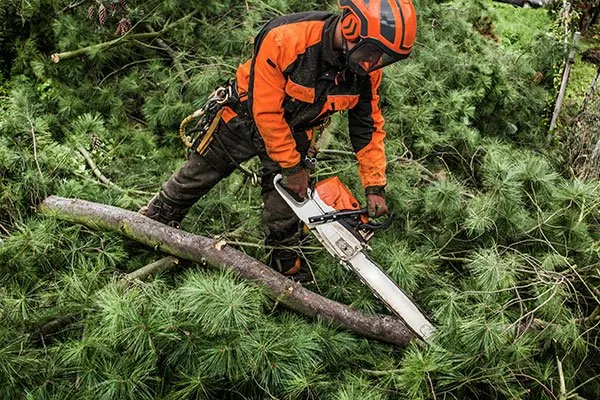
Cairns Arborist Solutions arranges tree removal, lopping, palm work and stump grinding in Redlynch through independent local arborists and tree contractors. The suburb runs from established estates on the valley floor to acreage against the range, and the tree work varies just as much.
Estates and acreage in one suburb
In the newer streets, the typical jobs are palms that have outgrown front yards, fast-growing shade trees too close to the house, and stumps left after landscaping. On acreage, the work is bigger: large removals, clearing around sheds and driveways, and dealing with trees damaged in storms.
Because Redlynch blocks vary so much, so does the method. On acreage with open space, a tree may be felled in one piece. In estates where houses sit close together, the same tree would be climbed and lowered by rope.
The rainforest edge
Parts of Redlynch back onto rainforest on the range. Trees along that edge often include native species, some of which may be protected, and properties near the bush may fall under Cairns Regional Council's planning scheme overlays. Clearing on the edge can also expose the remaining trees to wind they have never had to resist. Before major work, check with council and ask the arborist whether selective pruning would achieve what you need.
Larger rural-residential lots may also be subject to Queensland's vegetation management framework. Check before clearing native vegetation beyond a tree or two.
Valley ground in the wet
The valley floor collects water in heavy rain, and some soils stay saturated for weeks. That matters in two ways. First, trees in waterlogged ground are more likely to tip at the root plate in strong wind, so a lean that appears after rain deserves prompt attention. Second, heavy machinery may damage lawns and driveways or get bogged, so planned work goes more smoothly in the dry season.
Fruit trees and palms
Redlynch gardens often include mangoes and other fruit trees alongside palms. Mangoes usually respond best to reduction and thinning rather than removal. Coconuts and other palms benefit from a clean before the cyclone season. See our pages on tree lopping and palm tree lopping and removal.
Questions worth asking on a Redlynch job
On bigger blocks, scope creep is easy: one tree turns into a clean-up of the whole boundary. Before you agree, check that the quote lists every tree by location, says whether each is removed, reduced or left, and states where logs and chip end up. On estate blocks, ask how the crew will protect the neighbour's fence and roof, and whether a platform or a climber is being used. If anything is near the range or a creek, ask whether the contractor has checked for overlays. And ask to see their licences and insurance before work starts.
Getting a quote in Redlynch
Call (07) 4064 9207 or use the form below. Tell us whether you are on an estate block or acreage, what the tree is near, and how a truck could reach it. The arborist will look at the site and give you a written price.
Services: Tree Removal · Tree Lopping · Stump Grinding & Stump Removal · Palm Tree Lopping & Removal
Other parts of Cairns we cover
Before booking, the cyclone season guide and the cost page answer most first questions.
Questions people ask before they commit
Can I clear trees on my Redlynch acreage?
It depends on the property. Larger lots may be affected by Queensland vegetation management rules or Cairns planning scheme overlays. Check with Cairns Regional Council and the Queensland Government before clearing more than a few trees.
Is the ground in Redlynch too wet for tree work in the wet season?
Low-lying parts of the valley can stay soft after heavy rain. Urgent jobs can usually be climbed, but machinery-heavy work such as stump grinding is often best done in the dry months.
My trees back onto rainforest. What should I keep in mind?
Trees on the bush edge can be exposed to wind once neighbouring vegetation is removed, and native species may be protected. Ask the arborist about selective pruning rather than clearing.
Can felled trees be left on acreage?
Often, yes. Logs can be left to break down or used as edging, and chip can be spread as mulch. The quote should say exactly what stays and what goes.